Non-GMO vs Organic Seeds: What the Labels Mean in Canada
Organic seeds are always non-GMO, but non-GMO seeds are not always organic. “Non-GMO” speaks only to genetic engineering. “Organic” covers how the parent plants were grown, what inputs were allowed and who checked it. If you are picking seeds for your garden, or a plantable card for someone you care about, knowing the difference helps you read a label with confidence.
TL;DR
- Organic means non-GMO, but not the other way around. Certified organic seed cannot be genetically engineered, while a non-GMO label says nothing about growing methods or certification.
- In Canada, garden seeds sold to home gardeners are not genetically engineered anyway. The University of Saskatchewan notes GMO seed is not sold to the general consumer, so a non-GMO label confirms a default rather than a rare feature.
- Look for the Canada Organic logo if organic production matters to you. Seed represented as organic must be certified to the Canadian Organic Standards in certain trade situations or when it carries the federal logo.
- Heirloom, hybrid and untreated are separate questions. None of them automatically means organic or non-GMO, or the reverse.
- Pick for your climate and your goal first, then use the labels to narrow things down.
Table of Contents
- The short answer: are non-GMO seeds organic?
- What “organic” means for seeds in Canada
- What “non-GMO” means, and why you see it everywhere
- Organic vs non-GMO at a glance
- Heirloom, hybrid, untreated: the other words on the packet
- Do they differ in price, availability or performance?
- How to check a seed claim in Canada
- What this means for plantable cards
- Our perspective
- Send a card that grows
- FAQ
- Sources
The short answer: are non-GMO seeds organic?
No, not automatically. Think of the two labels as answering different questions.
- Non-GMO answers: “Was this seed genetically engineered?”
- Organic answers: “Was this seed produced under organic standards, with genetic engineering prohibited, synthetic inputs restricted and a certifier checking?”
Grow Organic explains that a non-GMO claim does not establish organic certification, treatment status, breeding method or seed-saving suitability. Anderson Seed and Garden puts the relationship plainly: all organic seeds are non-GMO, because no genetically modified organisms are allowed in organic production, but non-GMO seeds may or may not meet the wider organic requirements about pesticides and fertilizers.
So organic sits inside non-GMO, like a smaller circle inside a bigger one.
What “organic” means for seeds in Canada
Organic is a regulated word here. The Canadian Food Inspection Agency (CFIA) states that food, feed or seed products represented as organic in import, export and inter-provincial trade, or carrying the federal organic logo, must be certified to the revised Canadian Organic Standards. Saskorganics adds that organic seed falls under the same oversight, and producers must be ready to demonstrate that their organic claims are truthful.
What does that look like on the farm?
- An accredited certifier is involved. Producers who want to market products as certified organic and use the Canada Organic label must hire an accredited certification body that reviews their system and provides inspector oversight.
- Genetically engineered seed is prohibited. An organic field crop plan from a Canadian certifier states that genetically engineered seed and seed treated with prohibited substances cannot be used, and that organic seed must be used if it is commercially available.
- Seed is untreated. Seeds of Diversity notes that certified organic growers are required to use untreated seed, meaning no fungicide coating.
- The logo has a threshold. Only products with 95% or more organic content may be described as organic or carry the Canadian Organic Logo.
One honest note on what organic does not mean. Grow Organic points out that organic is not a blanket claim that a product is chemical-free, pesticide-free, nutritionally superior or guaranteed to perform better. It is a statement about the production system and the standard behind it.
What “non-GMO” means, and why you see it everywhere
A GMO (genetically modified organism) is a plant whose genes were altered through genetic engineering. Non-GMO simply means that has not happened to the seed.
In Canada, home gardeners are in a particular position. The University of Saskatchewan states that it is not legal to sell GMO gardening seeds to the general consumer, that only farmers and large commercial agencies buy GMO seeds for commercial use, and that the “GMO-free” wording on some packets works as marketing. Seed-bank.ca agrees that no approved GMO tomatoes, peppers, cucumbers, squash, lettuce or beans are commercially available to home gardeners.
That does not make a non-GMO statement meaningless. It is a clear, plain-language promise that shoppers understand, and it matters to many people who want to know exactly what they are planting. A few points help you read it well:
- Contamination is the one real-world concern. Sage Garden explains that Non-GMO Verified seed has been screened for inadvertent contamination, since seed grown near commercial fields with GMO crops can pick it up.
- Field crops are different from garden crops. Corn, soybeans and canola have commercial genetically engineered types. The Canadian organic plan above asks growers to get a non-GMO affidavit for conventional seed of those crops. A backyard tomato or basil plant is a different story.
- Non-organic does not mean GMO. Johnny’s Selected Seeds notes that the majority of vegetable crops grown today have not been genetically engineered.
Organic vs non-GMO at a glance
| Question | Organic seed | Non-GMO seed |
|---|---|---|
| Genetically engineered? | No, prohibited | No |
| Grown under organic standards? | Yes | Not necessarily |
| Third-party certification? | Yes, through an accredited certifier in Canada | Depends on the claim; some are verified, some are the seller’s own statement |
| Untreated? | Yes, organic growers use untreated seed | Not guaranteed |
| Can it be a hybrid? | Yes | Yes |
| Can it be an heirloom? | Yes | Yes |
Utah State University’s extension guide makes the same point: organic varieties can be heirlooms, open-pollinated or hybrids, but they cannot be GM crops.
Heirloom, hybrid, untreated: the other words on the packet
Most confusion comes from mixing up labels that describe different things. Grow Organic sorts them neatly: certified organic describes production and handling, non-GMO describes genetic engineering, heirloom describes a variety’s history, open-pollinated describes a pollination and seed-saving category, hybrid is a deliberate cross between selected parent lines, and untreated means no specified seed treatment was applied. One term does not automatically imply another.
Heirloom and open-pollinated
Seeds of Diversity says heritage or heirloom seeds must be public domain and open-pollinated. Open-pollinated plants, when kept isolated from varieties they can cross with, produce seed that is true to type. That is the reason seed savers love them.
Heirloom is not a synonym for organic. The University of Saskatchewan notes heirloom seeds are no more or less organic than other seeds, and both heirloom and non-heirloom seed can be treated with a fungicide coating.
Hybrid
Hybrid does not mean GMO. Sage Garden states that hybrid seeds are not GMO and are fully acceptable under organic standards. The crosses are controlled by the breeder, which often brings useful traits such as disease resistance.
A quirk worth knowing: Seed-bank.ca observes that the non-GMO butterfly label shows up often on heirloom packets and rarely on hybrid ones, which creates a false impression, since hybrids without the label are equally non-GMO.
Untreated
Treated seed has a coating, often a fungicide, to protect against rot in cold, damp soil. If you want to avoid coatings, look for the word “untreated” on the packet. It is its own claim.
Do they differ in price, availability or performance?
This is where honest answers are modest.
Performance. Organic seed does not require organic growing. Johnny’s Selected Seeds notes you are under no obligation to grow organic seed with organic methods, and it will perform under conventional practices too. Variety choice usually matters more than the label. Seed-bank.ca points out that for Canadian Zones 2 to 5, with short seasons, early-maturing hybrid tomatoes of 60 to 70 days are a practical choice, as are short-season open-pollinated varieties such as Stupice, Glacier and Sub-Arctic Plenty.
Price and availability. Prices vary by seller, crop and pack size, so compare the specific packets you are considering rather than assuming one label is always dearer. Certified organic seed involves certification, so it is common to see it priced on its own terms. Selection is also narrower for some crops, and the Canadian organic rules acknowledge this by asking growers to use organic seed if commercially available.
Seed saving. Both organic and non-GMO seed can be saved if the variety is open-pollinated. With open-pollinated or heirloom plants, you collect ripe seed at season’s end, dry it, store it somewhere cool and dark, and replant in spring. Seed-bank.ca adds that saving from your strongest plants lets a variety adapt to your microclimate and soil.

How to check a seed claim in Canada
A few simple steps make a packet easy to read.
- Decide what you care about. Avoiding genetic engineering, supporting organic production, avoiding coatings, saving seed or growing for a short season are five different goals.
- Look for the Canada Organic logo if organic is the goal. The Canadian Biotechnology Action Network (CBAN) recommends it, along with the Ecological Seed Finder index of Canadian seed companies, which has a certified organic filter.
- Check the Safe Seed Pledge. CBAN also points to the Safe Seed Pledge site for finding Canadian seed companies that have signed it.
- Read the exact words. “Non-GMO,” “untreated,” “heirloom” and “organic” are separate claims. Grow Organic advises verifying the exact product and certifier.
- Match the variety to your season. Frost dates and days to maturity decide whether a plant ripens at all.
Grow Organic also reminds gardeners that none of these choices makes the other categories broadly inferior. That is a kind way to look at it: the best seed is the one that fits your garden and your values.
What this means for plantable cards
The same label questions apply when the seeds are embedded in paper. People often ask what is inside a plantable card, whether it will bloom and whether it is safe for their garden.
Here is how we approach it at Greet n’ Grow. Our cards are made in Canada from 100% post-consumer recycled paper and embedded with non-GMO, non-invasive seeds for flowers, herbs or vegetables. The card arrives with a recycled kraft envelope, it is blank inside for your own note, and it ships in plastic-free, compostable packaging.
If you want to go deeper, these guides cover the practical side:
- What non-GMO seed paper means and how to buy it
- Four checks for invasive species in seed paper
- When to plant seed paper in Canada
- Native seed paper and untraceable wildflower mixes
The soil rule of thumb on that planting guide is worth remembering: wait until the soil warms to about 7 to 10°C, and your card has the best chance to sprout.
Our perspective
When people ask us about seeds, they are really asking whether they can trust what they are about to plant. We think that is the right question, and it deserves a clear answer.
We chose non-GMO, non-invasive seeds for our cards because a plantable card goes into someone’s garden, a pot on a balcony or a child’s first planting project. We want the sender and the person receiving it to feel good about what grows. “Non-GMO” is a plain, honest promise, and “non-invasive” protects the Canadian landscape around it.
We also believe the card itself matters. Ours is made in Canada from 100% post-consumer recycled paper, with a recycled kraft envelope and plastic-free, compostable shipping. A card should not end up in the bin after a week. It should become something living.
Our advice to any gardener is simple: know what each label says, choose what fits your goals, and plant with care. That is how a small gesture turns into a flower, an herb or a vegetable that someone remembers.
Trevor
Send a card that grows
If you are choosing a gift for a gardener, a new parent, a couple or a friend who loves nature, a plantable card lets your message do double duty. We make cards for many occasions, and each one is blank inside so you can write something personal.
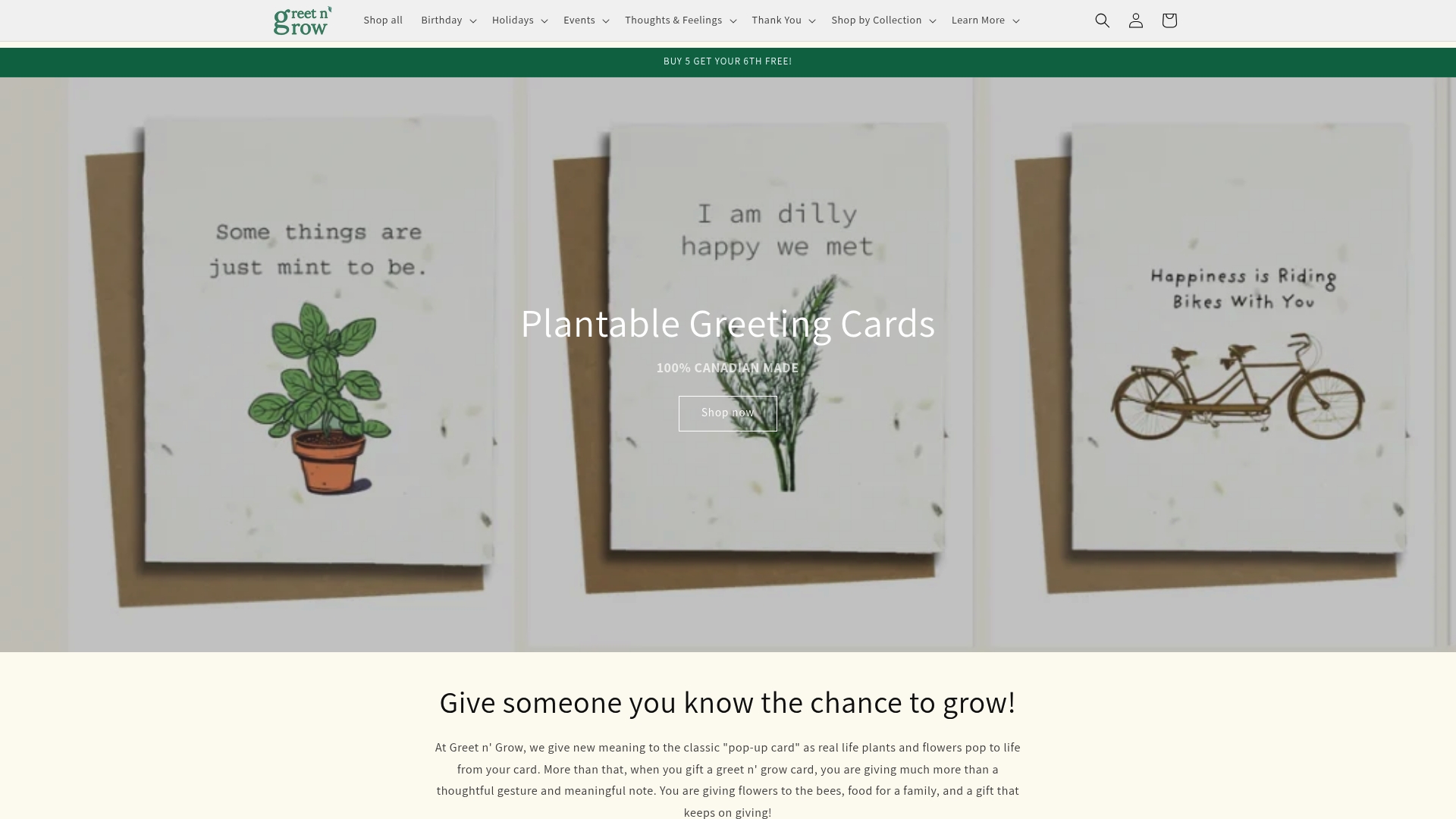
Browse our plantable greeting cards, or head straight to our plantable wedding cards and seed paper Valentines when the season calls for them. Planting is easy, and our seed paper vs regular paper guide shows what actually grows.
FAQ
Are non-GMO seeds organic?
Not necessarily. Non-GMO only says the seed was not genetically engineered. Organic also covers how the parent plants were grown and requires certification in Canada when sold as organic, so all organic seed is non-GMO but not all non-GMO seed is organic.
Can I buy GMO vegetable seeds in Canada as a home gardener?
The University of Saskatchewan states that GMO seed for commercial use is sold to farmers and large commercial agencies, not to the general consumer. For a home garden, the usual tomato, lettuce or bean packet is not a GMO seed. If you want extra assurance, look for verification or a signed pledge from the seed company.
Is a hybrid seed the same as a GMO?
No. A hybrid comes from a controlled cross between two parent lines, something that also happens in nature. Sage Garden notes hybrids are not GMO and are acceptable under organic standards.
Does “heirloom” mean organic?
No. Heirloom describes a variety’s history and its open-pollinated nature. An heirloom can be organic, treated or untreated, so check the packet for the organic logo or the word “untreated” if either matters to you.
How do I know a seed is truly organic in Canada?
Look for the Canada Organic logo and a named certifier. CBAN suggests using the Ecological Seed Finder’s certified organic filter to find Canadian seed companies, and you can read the packet wording closely before you buy.
Sources
- Understanding Differences Between Organic & Non-GMO Seeds, Anderson Seed and Garden
- Varietal Selection, Utah State University Extension
- Organic vs Heirloom vs Non-GMO Seeds, Grow Organic
- FAQs on Organic Growing, Johnny’s Selected Seeds
- Choose Non-GM Seeds, CBAN
- Seed Listing FAQs, Sage Garden
- Heirloom seeds and GMO seeds, Gardening at USask
- Heirloom vs Hybrid Seeds: The Complete Gardener’s Guide, Seed-bank.ca
- Canadian Organic Standards, Canadian Food Inspection Agency
- Organic fruit production in Ontario, ontario.ca
- CSI Organic Field Crop System Plan
- Choosing Seed Varieties, Seeds of Diversity
- Labelling booklet, Canada Organic Trade Association
- Organic Standards and Regulation, Saskorganics