
Seed Paper Disadvantages and How to Avoid Them
Most seed paper drawbacks come down to three things: which seeds are in it, how it is planted, and what happens to it afterwards. Choose paper made from recycled pulp with non-invasive seeds, plant it the way it is meant to be planted, and the common worries mostly disappear. Our plantable cards are made in Canada from 100% post-consumer recycled paper with non-GMO, non-invasive seeds, so we built them around exactly these questions.
This guide is for anyone about to send or give a plantable card and wondering what could go wrong. We go through each concern honestly, explain why it happens, and show what to look for.
TL;DR
- The biggest concern is the seed mix. Look for paper with non-invasive, non-GMO seeds and a clear description of what is inside.
- Germination depends on moisture, warmth, light and a little patience, so a card that is planted well and kept damp has the best chance to sprout.
- A seed card only does its job when it is planted. Tell the recipient to plant it rather than bin it.
- The message is easiest to write on a card that is blank inside, with a note added by hand before it is sent.
- Plantable cards are a thoughtful gift because they grow into something. Giving a few simple planting tips along with the card helps the gift succeed.
Table of Contents
- Why people ask about seed paper drawbacks
- Concern 1: What seeds are actually inside?
- Concern 2: Will it actually grow?
- Concern 3: A seed card that gets thrown out
- Concern 4: Can you write on it?
- Concern 5: Storage and shelf life
- Concern 6: Is the cost worth it?
- A quick checklist for choosing seed paper
- Who seed paper suits best
- Ready to send one?
- FAQ
- Sources
Why people ask about seed paper drawbacks
Seed paper is paper with seeds worked into the pulp. You plant the paper, and the seeds sprout through it as it breaks down. The idea is lovely, and that is why it deserves a few honest questions before you spend money on it, especially if you are giving it to a child, a new gardener or a customer.
The questions fall into six groups: what seeds are in it, whether it will grow, what happens if it is thrown out, whether you can write on it, how it is stored, and what it is worth. We take them in that order.
Concern 1: What seeds are actually inside?
This is the question that matters most in Canada. The Canadian Food Inspection Agency describes invasive plants as species introduced outside their natural range that cause serious, often irreversible damage to ecosystems, the economy or society. Seed paper that is mailed across the country and planted in gardens should not add to that problem.

A “wildflower mix” on its own tells you very little. Some mixes are not described seed by seed, and a few contain plants that are regulated. For example, the CFIA lists bladder campion as a Class 3 secondary noxious weed seed under the Canadian Weed Seeds Order, 2016. It is exactly the kind of plant you would not want to turn up in a card.
What to check before you buy
- A clear claim of non-invasive seeds. Vague wording such as “wildflower blend” is not enough. Look for a plain statement that the seeds are non-invasive.
- Non-GMO seeds. This should also be stated outright.
- Where it is made. Paper made in Canada is easier to match to Canadian growing conditions and rules.
- What the paper is made from. Post-consumer recycled pulp keeps used paper in circulation instead of using new fibre.
Our cards are made in Canada from 100% post-consumer recycled paper and carry non-GMO, non-invasive seeds for flowers, herbs or vegetables. If you want a deeper look at how to judge this for any brand, we wrote a guide to what non-invasive seed paper means, a short list of four checks for invasive species and a piece on native seed paper in Canada.
Concern 2: Will it actually grow?
Seed paper is a living gift, so results depend on growing conditions, just as with any packet of seeds. Kew’s Grow Wild programme explains that planted wildflower seed paper is placed on soil, covered lightly with compost, watered well, then kept moist in a sunny spot while you wait for germination. The U.S. National Oceanic and Atmospheric Administration’s seed paper activity says sprouts may appear in a few weeks. So the honest expectation is a few weeks of waiting, not overnight results.

Why paper works as a carrier
A 2024 study in the International Journal of Plant & Soil Science tested recycled paper as a germination medium and found no statistically significant overall difference in viability between recycled paper and soil (P = 0.214). Results did vary by plant: pechay germinated at 100% and mustard at 96.30% in recycled paper, while spinach and saluyot were lower. The takeaway for a card buyer is that seed choice matters. Fast, forgiving flowers and herbs are a sensible match for a greeting card.
The conditions that make the difference
The University of New Hampshire Extension explains in its seed germination guidance that seeds need continuous moisture, oxygen and a suitable temperature. Too much water restricts oxygen, and drying out after germination has begun can kill the young plant. In plain terms, you want soil that stays damp like a wrung-out sponge, not soaked and not dry.
Three habits make most of the difference:
- Plant it flat and shallow. A thin covering of soil is enough. We explain why in our guide to planting seed paper flat under 1 cm of soil.
- Keep it moist. A quick daily check, especially in warm weather, matters more than a big watering once a week.
- Give it light. Our note on how much sunlight seed paper needs covers the range.
If you need step-by-step directions, our how to plant seed paper cards page walks through it, and our germination timing and fixes article helps if the first attempt is slow.
Timing the gift
Seeds grow when the weather suits them. A card that arrives in a Canadian January will not sprout outdoors, so tell the recipient they can plant it in a pot indoors by a bright window, or save it until the soil warms in spring. A short line on the back of the envelope or in your note takes care of this.
Concern 3: A seed card that gets thrown out
This is the drawback with the most truth in it: a plantable card that goes in the garbage has not done anything special. The benefit comes from planting. That is why the way you present the card matters.
Here are simple ways to make sure it gets planted:
- Write “plant me” or a short growing instruction in your handwritten note.
- Pick a card that suits the recipient’s life: herbs for someone who cooks, flowers for a gardener, a pot-friendly card for an apartment dweller.
- Give it along with something to plant it in, such as a small pot or a packet of soil, for a child or a first-time gardener.
Our cards are made to be planted, and the recycled kraft envelope and plastic-free, compostable shipping mean there is little else to throw away along the way. A plant that grows from the card is the part people remember.
Concern 4: Can you write on it?
The common worry is that seed paper is bumpy or fragile, so a message will smudge or tear. The simplest way around this is to separate the message from the planting. Our cards are blank inside, so you write your note on the card itself the same way you would on any greeting card, and the person who receives it can keep the note and plant the card later.
A few practical habits help:
- Write with a pen you have tried on a scrap of the same kind of card first.
- Let ink dry fully before you put the card in its envelope.
- Keep the card flat and dry until it is sent.
The handwritten note is also what gives the card its personal feel. It is the heart of the gift and takes only a minute.
Concern 5: Storage and shelf life
Seeds are living things, so seed paper is best kept somewhere cool, dry and dark until you send it. Damp is the thing to avoid, because moisture can wake the seeds before they are planted. Buy cards for the season you will use them rather than stocking up for years.
A practical routine: buy your cards a few weeks before the occasion, keep them in a drawer in their envelope, write your message, and mail them. For cards bought for an event such as a wedding, plan the order a little ahead of time so you are not holding stock for long.
Concern 6: Is the cost worth it?
A plantable card is not the cheapest card on the rack, because a card with seeds and recycled paper is made differently from one that is printed and cut in a factory. The comparison that makes sense is not card against card. It is the price of a card plus the small gift that comes with it, since a recipient gets a message and something to grow.
It is also a good fit when you want to give the same thing to many people. Businesses sending thank-you notes, and couples with wedding favours or thank-you cards, can use a single product that carries a message and a green gesture together. You can browse our plantable wedding cards and our seed paper Valentines to see how themed ranges work.
A quick checklist for choosing seed paper
| Question | What a good answer looks like |
|---|---|
| What are the seeds? | Named as non-invasive and non-GMO |
| What is the paper? | 100% post-consumer recycled |
| Where is it made? | Canada, so rules and conditions match |
| Can I write on it? | Blank inside, with room for a personal note |
| How is it packed? | Recycled envelope, plastic-free shipping |
| Are planting directions clear? | Yes, with a simple how-to page |
If a product can answer all six, most of the disadvantages people worry about have already been handled for you. For anything that touches on what goes in the soil, such as laminated or bleached paper, our guide to seed paper safety in Canada is a good next read.
Who seed paper suits best
- Eco-conscious gift-givers who want a card that leaves less behind.
- Parents who want a project that teaches a child how a seed becomes a plant. Watching it sprout over a few weeks is a lesson in patience.
- Couples marking an anniversary with something that grows each year.
- Friends of nature lovers, who tend to appreciate a living gift.
- Businesses that want to say thank you in a way that matches their values.
Our view
When people ask us about seed paper’s disadvantages, we hear a fair question: will this really be a good gift? We think the answer depends on three decisions you can control. What is in the seeds, how the card is made, and whether the person receiving it knows to plant it.
That is why we made our cards from 100% post-consumer recycled paper in Canada, why the seeds are non-GMO and non-invasive, and why the inside is blank for your own words. A card should carry your voice first. The plant is what keeps the memory going.
We also ship without plastic, in compostable packaging, because a gift meant to be kind to the earth should not arrive wrapped in something that is not.
If you take only one tip from us, it is this: add a line telling the recipient to plant the card. It turns a nice idea into a flower on a windowsill.
Trevor
Ready to send one?
If you are choosing a card for a birthday, a thank-you, a wedding or a holiday, our plantable greeting cards are made in Canada from 100% post-consumer recycled paper, with non-GMO, non-invasive seeds for flowers, herbs or vegetables. Each comes with a recycled kraft envelope and is blank inside for your message. Bundles and themed packs are available, and your order ships plastic-free in compostable packaging.
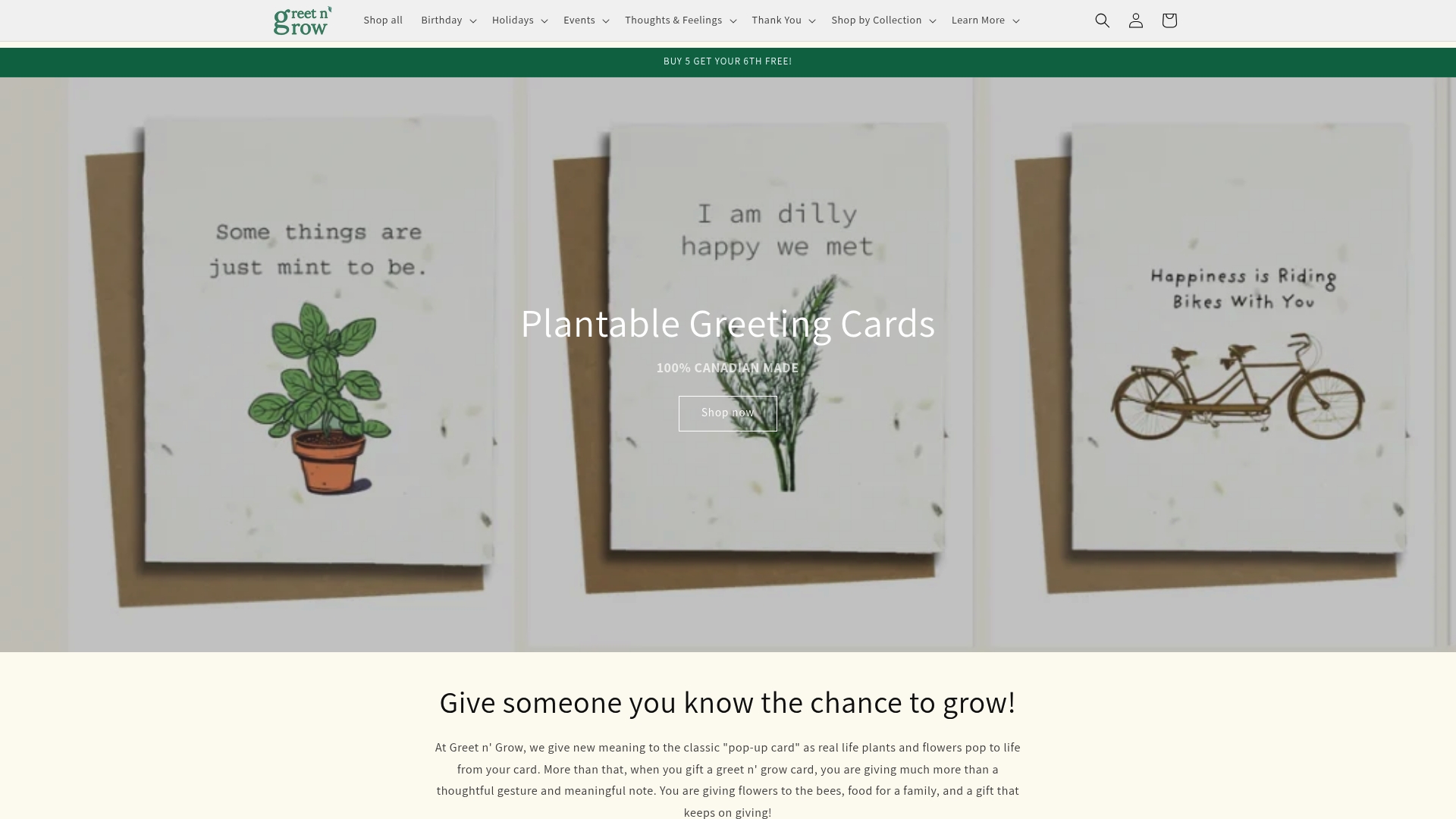
For a specific occasion, you might like our Floral Wedding Card or our Sheep Thank You Card.
FAQ
Is seed paper bad for the environment?
Seed paper made from recycled pulp with non-invasive seeds is designed to be planted, so the paper breaks down and the seeds grow. The concern is paper made with unnamed or invasive seed mixes, so check the seed claims before buying. Our cards use 100% post-consumer recycled paper and non-invasive seeds.
Why didn’t my seed paper grow?
The usual causes are soil that dried out, soil that stayed waterlogged, too little light or planting when it was too cold. Seeds need steady moisture, oxygen and a suitable temperature, and sprouts can take a few weeks to appear. Our germination guide covers timing and fixes.
Can you write on seed paper?
Our cards are blank inside so you can write your own note, just as on any greeting card. Let the ink dry fully before closing the envelope, and keep the card flat and dry until it is sent.
Can I plant a seed card indoors?
Yes. A pot of soil by a bright window works well, especially when the weather outside is too cold for planting. Cover the card with a thin layer of soil, as Kew suggests, keep it moist, and wait for the sprouts.
Sources
- Make your own wildflower seed paper, Grow Wild, Kew
- Activity: Make Seed Paper, NOAA NESDIS
- An Evaluation of Recycled Papers as Storage and Germination Medium, International Journal of Plant & Soil Science, 2024
- Seed germination guidance, University of New Hampshire Extension
- RMD-13-04, Canadian Food Inspection Agency
- Weed Seed: Silene vulgaris (Bladder campion), Canadian Food Inspection Agency