
Seed Paper Safety in Canada: Avoid Lamination and Bleach
Seed paper is safe to handle and plant in almost every case, especially when it’s made from unbleached or post-consumer fibres and printed with water-based inks. The main things to watch for are chemical coatings, laminates, and unclear seed sourcing, which can affect both germination and, rarely, local plant life. If you’re ever unsure about a card or sheet, check the seller’s claims about materials and seeds, or run a quick planting test before committing a whole batch to soil. A reputable brand that provides clear information about materials and seed sources is a good place to start if you want clear answers before you buy.
TL;DR:
- Most seed paper remains viable for one to three years if stored in a cool, dark, and dry place, but freshness declines over time.
- Sprouts usually appear within 7 to 10 days under proper watering and lighting conditions, with blooms following in 8 to 12 weeks.
- Seeds pressed near the surface sprout more reliably and grow faster than those buried deep within dense sheets.
- Using unbleached, post-consumer fibers and water-based inks increases safety, while chemical coatings or laminates can hinder germination and biodegradability.
- Verifying seed sources and avoiding plastic coatings or chemical treatments significantly reduces ecological risks and improves planting success.
Table of Contents
- What is seed paper and how does it work?
- Is seed paper safe to handle and plant?
- How do you plant seed paper, and how long does it take to sprout?
- How long does seed paper last in storage?
- Is seed paper actually good for the environment?
- Can you make DIY seed paper safely at home?
- Greetngrow’s planting and storage resources
- When is seed paper actually worth choosing?
- Send a card that grows into something
- Sources
- FAQ
What is seed paper and how does it work?
Seed paper starts as recycled or post consumer paper pulp, pressed into thin sheets with seeds mixed in or applied close to the surface during the papermaking process. The placement matters more than people expect. Seeds sitting too deep in a thick sheet struggle to break through, while seeds pressed near the surface sprout more reliably because they have easier access to light and moisture.
Permeability is the other piece of the puzzle. A sheet that holds water without turning to mush lets seeds absorb moisture evenly, which is why some production methods focus on high permeability without chemical reinforcement.
Most seed paper on the market uses one of these seed types:
- Annual wildflowers, chosen for fast germination and colour
- Culinary herbs like basil or parsley, popular in gift cards
- Vegetable varieties such as tomato or lettuce, though these need more space to mature
Reputable producers stick to non-invasive, non-GMO seed mixes, partly because it’s the responsible choice and partly because nobody wants a card that causes a headache for a local ecosystem down the road.
Is seed paper safe to handle and plant?
Yes, for the most part, but the answer depends heavily on how the paper was made. The ingredients you can’t always see with the naked eye are the ones that matter most.
What to avoid:
- Chlorine-bleached pulp, which leaves chemical residue behind
- Solvent-based inks instead of water-based or vegetable-based alternatives
- Laminates or plastic coatings that block moisture and prevent the paper from breaking down
- Chemical reinforcing agents added purely to make the sheet feel sturdier
What to look for instead:
- Unbleached or post-consumer recycled fibres
- Water-based or vegetable-based printing, which reduces toxic residue and supports biodegradability
- No lamination, glossy finish, or plastic coating anywhere on the sheet
- A clear seed list from the seller, ideally naming species rather than just “wildflower mix”
Seed sourcing deserves its own mention. Non-invasive, tested seed lots reduce the odds that you accidentally introduce a plant that outcompetes what’s already growing nearby. If a seller can’t tell you what’s in the mix, treat that as a red flag rather than a technicality.
Before planting a large batch, contact the vendor and ask about their materials and seed sourcing directly. A small test planting, just a corner of one sheet in a pot, tells you a lot before you commit the whole card. And if the seed species are unspecified, it’s worth avoiding sensitive natural areas altogether and sticking to a garden bed or planter you control.
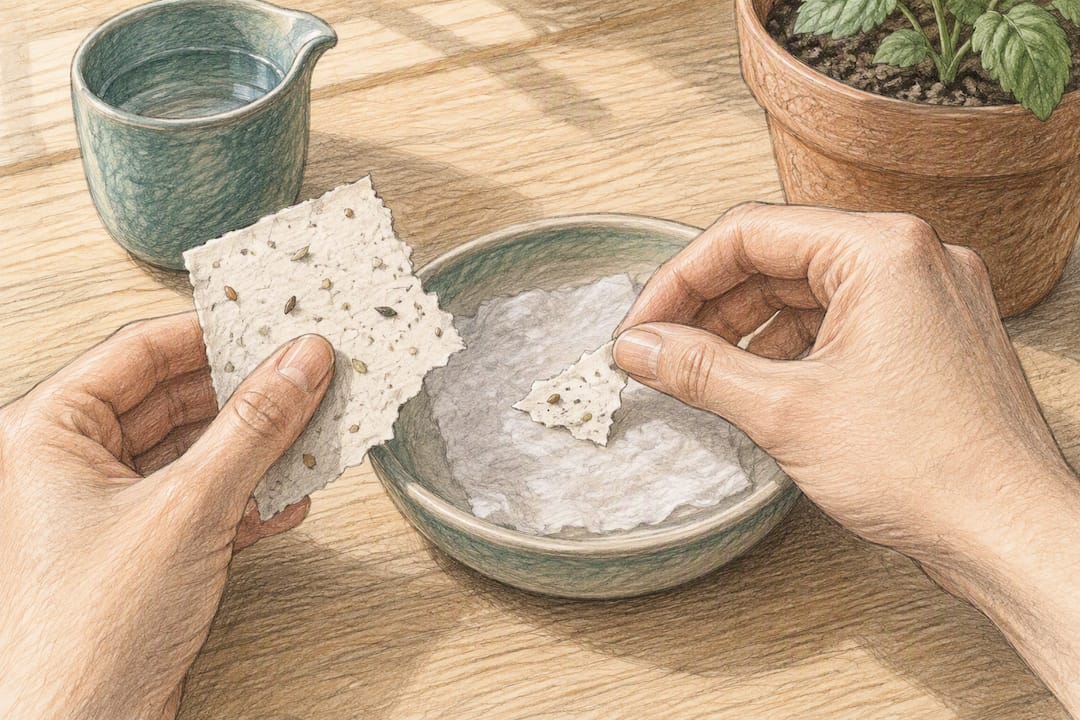
Pro Tip: Tear off a small strip before planting the whole card and soak it in a damp paper towel for a few days. If nothing sprouts, you’ve saved yourself the disappointment of burying an entire sheet for nothing.
How do you plant seed paper, and how long does it take to sprout?
Planting seed paper is simpler than most people expect, and the process barely changes whether you’re working with a card, a bookmark, or a full sheet.
- Prepare the soil. Loosen a small patch of soil or fill a pot with potting mix, then lightly compress the surface.
- Place the paper. Lay it flat on the soil, then cover it with a thin layer, roughly a quarter inch, of additional soil or press it gently into potting mix.
- Water evenly. Keep the area consistently moist without soaking it. Inconsistent watering is one of the most common reasons seeds fail to sprout.
- Give it light. Most seed mixes need a spot that gets decent sunlight, whether that’s outdoors or a bright windowsill indoors.
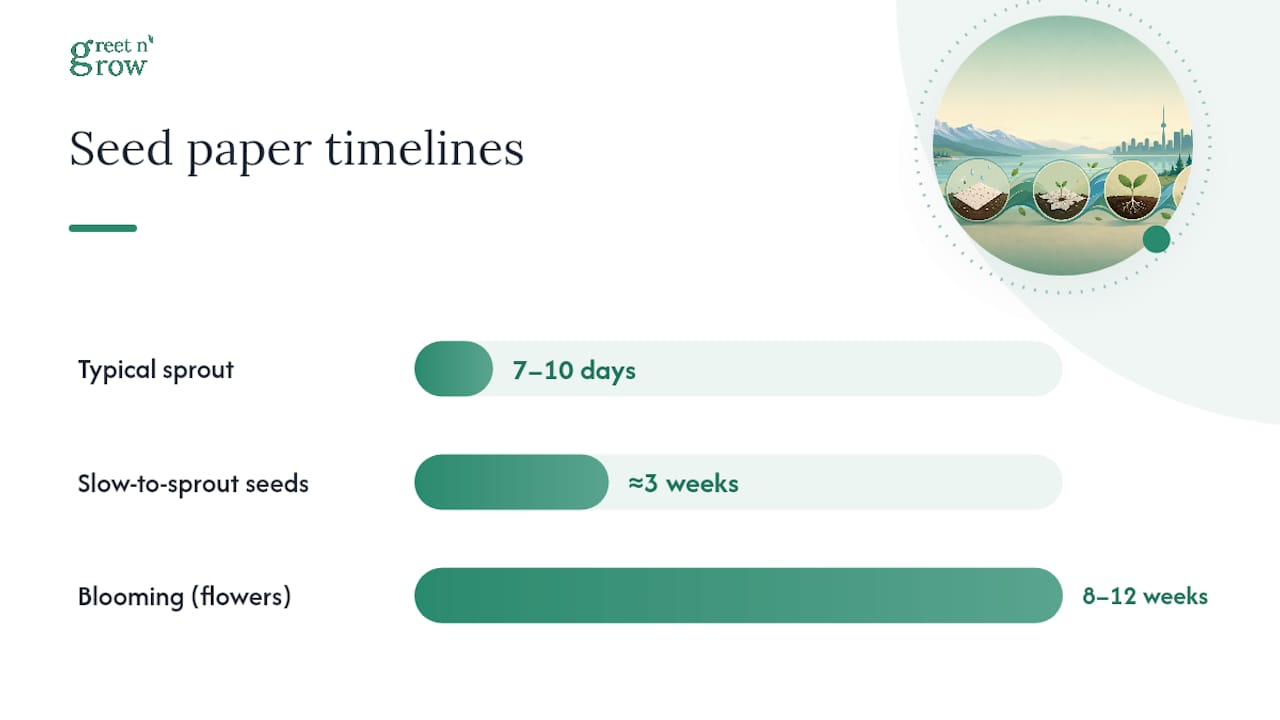
Timelines vary by species, but many wildflower blends sprout in 7 to 10 days, with blooms following in 8 to 12 weeks. Some seed types take closer to three weeks to show any green at all, so patience matters here.
If nothing happens after a few weeks, the usual culprits are old seeds, paper that’s too dense for roots to break through, uneven moisture, or planting outside the right season for that species. Soaking a test strip separately, as mentioned above, or planting a few seeds directly in soil without the paper, helps you figure out whether the problem is the seeds or the growing conditions. Our step-by-step planting guide walks through this in more detail, and the wildflower-specific instructions are worth a look if that’s what you’re working with.
How long does seed paper last in storage?
Seed viability drops the longer a sheet sits around, so storage conditions matter more than people assume when they toss a card in a drawer for a few years.
- Keep seed paper somewhere cool, dry, and dark
- Store it in its original paper packaging or something breathable, never sealed plastic
- Avoid attics, damp basements, or anywhere temperature swings are extreme
Most seeds hold onto their viability for one to three years, though this varies by species. Herbs and some wildflowers hold up longer than delicate vegetable seeds, so if you’re planning to gift a card for a future occasion, it’s worth asking the seller what to expect. Our durability and storage guide covers shelf life expectations by season and material.
A simple home test settles any doubt: dampen a small strip of the paper on a tray, keep it moist, and check for sprouts over one to two weeks.
Is seed paper actually good for the environment?
Seed paper decomposes well when it’s free of plastic, lamination, and synthetic reinforcing agents, and when it’s separated from other waste streams during disposal. Mixing it into general trash where it decomposes without oxygen can actually work against the benefits it’s designed to offer.
The upside is real. Wildflower-based seed paper supports pollinators, and because it’s often made from post-consumer paper, it cuts down on the single-use waste that ordinary greeting cards generate. Research on converting paper waste into seed-embedded material reported a 75% successful utilisation rate in one production study, showing there’s a genuine process behind turning waste paper into something plantable.
The risks are worth naming honestly too. Seed mixes that haven’t been vetted can introduce species that spread aggressively in the wrong region, and papermaking itself uses energy and water, so sourcing transparency matters.
Before buying in bulk, it’s fair to ask a producer:
- Where the seeds come from and whether they’re tested for noxious weeds
- What percentage of the paper is post-consumer material
- Whether any chemical additives are used in production
Can you make DIY seed paper safely at home?
DIY seed paper is a fun project, but a few precautions keep it from turning into a mess or a health hazard. The blender you use for craft pulp shouldn’t go anywhere near food afterward. Best practice is to dedicate a separate blender to craft use or pulp the paper by hand, since fibres and any leftover residue can linger in the blades.
- Use clean paper without glossy coatings or heavy ink coverage
- Source seeds you know aren’t invasive in your region
- Choose natural dyes or biodegradable glitter over plastic or metal foils, which stop the paper from breaking down
Community programs like Scouts Canada’s seed paper activity also stress adult supervision for kids’ craft sessions, which is a good habit even for adults working with sharp blender blades and wet pulp.
Pro Tip: If you’re making seed paper with kids, pre-tear the paper into small pieces before blending. It cuts down on both mess and blending time.
Greetngrow’s planting and storage resources
Greetngrow makes every card from 100% post-consumer material, with non-GMO, non-invasive seeds and production based in Canada. Those are the exact details worth checking on any seed paper you buy, and they’re stated plainly on the main product page.
Beyond the cards themselves, Greetngrow publishes practical guidance for people who want to get planting right the first time: a full planting walkthrough, a storage and shelf-life breakdown that debunks common myths, and species-specific instructions for wildflowers. These resources exist so a gift doesn’t end up forgotten in a drawer.
When is seed paper actually worth choosing?
Seed paper earns its place when the person receiving it values the novelty, the small teaching moment, and the pollinator support that comes with a wildflower mix, and when you can verify where the seeds came from. If your goal is strict native habitat restoration or large-scale ecological planting, a professional native seed mix suited to your exact region is the better tool. Near sensitive natural areas, stick to certified native seeds or keep the planting contained to a garden bed you control.
— Trevor
Send a card that grows into something
Greetngrow gives you a way to send a card that doesn’t end up in a landfill.
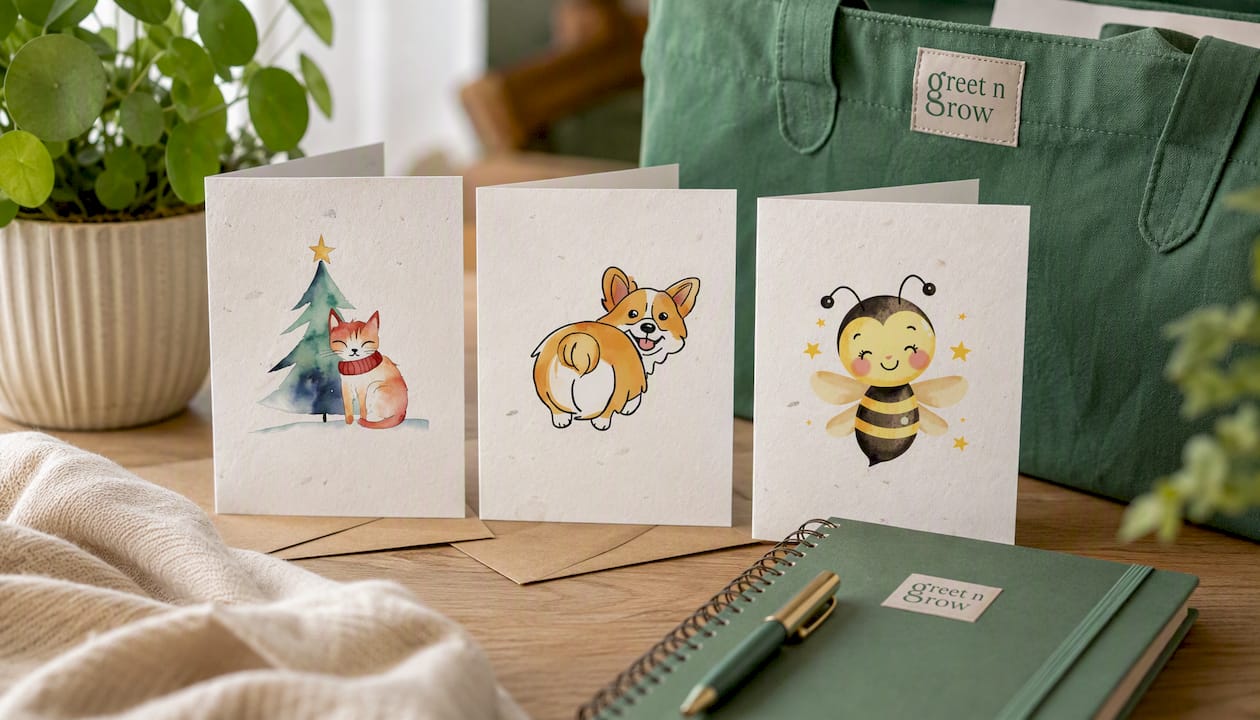
If you want to see what that looks like in practice, browse a few examples: the Cat Theme Holiday Card for the animal lover on your list, the Corgi Thank You Card for a gratitude note with a little extra warmth, or the Welcome New Baby Card for a gift that grows alongside a new family. Planning ahead for a wedding season or Valentine’s Day? Check the plantable wedding collection or the seed paper Valentines line. Pick a card, read the planting instructions included with your order, and send something the recipient can actually grow.
Sources
- Activity: Make seed paper | NESDIS | NOAA
- So you’ve received seed paper — now what? | Pacific Public Health
- Sustainable environment management through utilization of paper waste into seed envelopes | IOPscience
FAQ
What is seed paper made of?
Seed paper is made from recycled or post-consumer paper pulp with seeds mixed in or pressed near the surface during production. Reputable makers, including Greetngrow, use post-consumer material and non-GMO, non-invasive seeds rather than synthetic reinforcing agents.
Does seed paper actually work?
Yes, when it’s made without laminates or plastic coatings and the seeds are fresh and viable. Guidance from Pacific Public Health notes sprouts typically appear in 7 to 10 days, with blooms following in 8 to 12 weeks for many wildflower blends.
How long can seed paper last?
Most seed paper holds its seed viability for one to three years when stored somewhere cool, dry, and dark, though this varies by species. A quick damp-paper germination test is the most reliable way to check before planting a whole batch.
How long does it take for seed paper to sprout?
Sprouting generally happens within a few weeks under the right conditions, with many wildflower mixes sprouting closer to 7 to 10 days. Bloom time takes longer, often 8 to 12 weeks, so don’t judge success by sprouts alone.