
Seed Paper Pests: What to Watch For and How to Protect Your Seedlings
The pests that bother seed paper are mostly the same ones that bother any freshly sown seed: hungry birds and small rodents, and soil fungi that thrive when the ground stays too wet. The paper itself is not what attracts them. With a thin soil covering, gentle watering and a little patience, a plantable card has a very good chance of becoming the flowers, herbs or vegetables it was made to grow.
If you have just received a plantable card, or you are about to send one, this guide walks you through what can go wrong, how to spot it early and what to do about it. We also cover the other meaning of “pests” people search for: seeds that arrive in the mail that nobody ordered.
TL;DR
- The main threats to planted seed paper are damping-off (a group of soil fungi and water moulds), mould from overwatering, and birds or small mammals digging up seed.
- Keep the paper under a thin layer of soil, water lightly so it stays damp but never soggy, and use well-drained potting mix.
- Wait for the right season. Cold, wet soil is where seeds are most at risk, so start indoors in winter.
- Know what you are growing. Choose cards with seeds that are named, non-invasive and suited to Canadian gardens.
- Seeds that show up in your mailbox without being ordered are a different matter: do not plant them, and follow the CFIA’s disposal steps.
Table of Contents
- What “pests” really means for seed paper
- Damping-off: the quiet seedling killer
- Mould on the paper
- Birds, squirrels and other diggers
- How to plant seed paper to avoid trouble
- A quick troubleshooting table
- Know what you are growing
- Seeds you did not order
- What if you cannot plant your card?
- Our view on seed paper and pests
- Choose a card that grows
- FAQ
- Sources
What “pests” really means for seed paper
Seed paper is recycled paper with seeds pressed into it. You tear it up or lay it on soil, cover it lightly, water it, and the paper breaks down while the seeds sprout. It is gentle and simple, but a planted seed is a small, soft, nutritious thing, and plenty of living creatures would like to get to it first.
There are really three groups of trouble:
- Soil diseases that rot seeds or kill seedlings just after they sprout.
- Mould on the paper surface when it stays too wet.
- Animals such as birds, squirrels, chipmunks and voles that dig up or eat seed.
None of these is a flaw in the card. They are part of starting anything from seed, and each one has a simple fix.
Damping-off: the quiet seedling killer
Damping-off is the problem gardeners meet most often. Agriculture and Agri-Food Canada’s nursery crop profile lists seed decay and damping-off, caused by organisms such as Pythium, Phytophthora and Fusarium, as the specific challenges of growing plants from seed. It also names Botrytis, a grey mould, when seedlings are crowded together.
What does it look like? According to Mississippi State University Extension, the signs include seeds that never sprout, discoloured and rotting stems near the soil line, and seedlings that wilt, collapse and die. The same source explains that Pythium damping-off tends to appear in cool, wet, poorly drained soil, while Fusarium and Rhizoctonia prefer warmer, drier conditions. These organisms can travel in infested soil, water or dirty tools.

University of Maryland Extension adds that indoor seedlings, under grow lights or in a greenhouse, are especially likely to succumb when the growing mix drains poorly and is kept too wet.
What this means for your card
The lesson is the same each time: too much water and too little drainage. A seed paper card sits right at the soil surface, so it is easy to overdo the watering to “make sure” it is damp. Resist that. Aim for the dampness of a wrung-out sponge.
UC IPM notes that good drainage, careful irrigation, planting when soil and air temperatures favour quick emergence, and correct depth and spacing all help. It also observes that vigorous seedlings grown from good seed under the right light and temperature can often survive even where the fungi are present. In other words, healthy conditions are your best defence.
Mould on the paper
A fuzzy white or grey film on the surface of your planted card usually points to too much moisture and too little air. A seed-paper care guide is not needed to explain it: the same wet conditions that favour damping-off favour mould.
If you see it:
- Stop watering for a day or two and let the surface dry slightly.
- Move the pot somewhere with a little more airflow and light.
- Check that the pot has drainage holes and is not sitting in a full saucer of water.
- Scrape off the worst of the mould and keep the soil just damp.
If seedlings have already collapsed at the base, the kindest thing is to start again with fresh potting mix and a clean pot rather than reuse the soil.
Birds, squirrels and other diggers
University of Maryland Extension points out that voles, chipmunks, birds and squirrels may feed on seeds, and that starlings, finches, crows, pigeons and sparrows can dig them out and eat them. A bare paper card on top of garden soil, with seeds glinting inside, is an easy target.
Some easy ways to protect it:
- Cover it. Press the paper onto the soil, then add a thin layer of fine soil on top so the seed is not visible.
- Start in a pot. A container on a windowsill or a sheltered balcony keeps most wildlife away.
- Use a barrier outdoors. A lightweight mesh or a cloche over the pot or bed until seedlings are up works well.
- Pick a quieter spot. A site away from bird feeders and squirrel routes helps.
Because our cards are blank inside and come with a kraft envelope, many people plant them in a small pot as part of the gift: the sender writes a note, the recipient tucks the card into a container and sets it on a sunny sill. That also keeps the whole thing out of reach of garden visitors.
How to plant seed paper to avoid trouble
Here is a routine that heads off most of the problems above.
1. Choose the right time
Cold, soggy ground is where seeds sit and rot. We explain in our guide that you should wait for soil to reach 7 to 10°C before planting outdoors. If it is still winter, you can start seed paper indoors and move seedlings outside once the weather settles.
2. Use the right growing mix
Seeds of Diversity, a Canadian seed-saving charity, recommends a soft, spongy potting mix rather than garden soil for starting trays, because garden soil compacts into little bricks. Light, airy mix drains better, which is exactly what protects against damping-off.
3. Do not sow too thickly
UMass Extension notes that sowing too thickly creates high humidity around seedlings, which favours damping-off diseases. With seed paper, that means tearing a card into pieces and spreading them out rather than stacking them in one small pot. Give each piece a little space.
4. Cover lightly and water gently
Lay the paper flat, cover it with a thin layer of soil, and water with a fine spray or a watering can with a rose. Keep it damp, never swampy. Check daily and water only when the top feels dry.
5. Give light and warmth
A bright windowsill works for most herbs and flowers. Seeds sprout faster when the soil is comfortably warm, and the time they take varies with the plant and the temperature, so give them a couple of weeks before you worry. Some herbs and flowers are quicker than others.
6. Thin and transplant with care
Once seedlings have a couple of sets of leaves, snip out the weakest in crowded spots so air can move. Seeds of Diversity notes that growing in individual cells keeps roots from tangling, which means less damage at transplant time. Harden seedlings off by setting them outdoors for a few hours at a time before planting out.
A quick troubleshooting table
| What you see | Likely cause | What to do |
|---|---|---|
| Nothing sprouts, paper feels slimy | Seeds rotting in cold, wet soil | Let the mix dry slightly, move somewhere warmer, replant if needed |
| Seedlings fall over at the base | Damping-off | Water less, improve drainage, use fresh mix next time |
| White or grey fuzz on paper | Too much moisture, low airflow | Let the surface dry, add airflow, remove mould |
| Soil disturbed, paper pulled up | Birds, squirrels or voles | Cover with soil and mesh, or move indoors |
| Crowded, leggy seedlings | Too many seeds in one spot, low light | Thin them, add light |
Know what you are growing
When people search for seed paper and pests, many are really asking whether seed paper can bring in problem plants. It is a fair question. The BC Ministry of Agriculture’s Home and Garden Pest Management Guide advises avoiding wildflower seed mixes, because most contain invasive species or plants not adapted to local conditions, and recommends growing regional native plants.
The Canadian Food Inspection Agency (CFIA) gives a practical rule in its guidance on buying seeds online: identify plants by their scientific name, because common names can be ambiguous, and check that a label lists the species you want. Its advice for anything you cannot identify is short: when in doubt, keep it out.
The Canadian Wildlife Federation adds that native plants are better adapted to local conditions, need less upkeep and support wildlife, and that seeds treated with neonicotinoid pesticides can harm pollinators.
That is the kind of care we put into our own cards. Our seeds are non-GMO and non-invasive, and the cards are made in Canada from 100% post-consumer recycled paper. If you like to read more before you plant, our guides on checking seed paper for invasive species, native seed paper in Canada and seed paper safety go into more detail.

Seeds you did not order
A different kind of “seed pest” has made the news. The CFIA reports that since 2020, Canadians have received unrequested seed packages in the mail, often likely linked to a brushing scam, and that some seeds could become invasive plants or carry pests that damage forests, farms and natural areas.
This is not the same as a plantable card you chose or were given by a friend, but the safety steps are worth knowing:
- Do not open the packet if it is still sealed.
- Put the seeds, packaging and mailing label in a sealed bag, then inside a second sealed bag.
- Place it in regular garbage that goes to landfill.
- Do not plant, compost or flush them.
- If already planted, remove the seeds and any plants, double-bag them and send them to landfill.
The Canadian Wildlife Federation also recommends reporting unrequested seeds to your regional CFIA office. If you think you have found a new invasive pest or plant in your garden, the BC guide lists the Report-a-Weed line at 1-888-WEEDSBC for invasive plants and the CFIA at 1-800-442-2342 for suspected new invasive pests.
What if you cannot plant your card?
Some people keep a card as a memento, and that is lovely. If you cannot plant it, you can pass it to a friend with a garden or a sunny windowsill, or hold on to it until the season is right. Because our cards are blank inside, you can write a note first and keep it as a keepsake until planting time.
Our view on seed paper and pests
We make plantable cards because we believe a card should not end up in the bin after a week. A card that becomes a pot of flowers or herbs carries a message further, and it quietly teaches the person growing it a little about patience and soil.
Pests worry people more than they should. A thin layer of soil, a pot with drainage and a light hand with the watering solve most of it. We would rather you know what to expect than be surprised by a fuzzy leaf.
That is also why we care about what goes into our paper. Our cards are made in Canada from 100% post-consumer recycled paper, with non-GMO, non-invasive seeds, and they ship without plastic. A gift that grows should be good for the garden it ends up in.
Trevor
Choose a card that grows
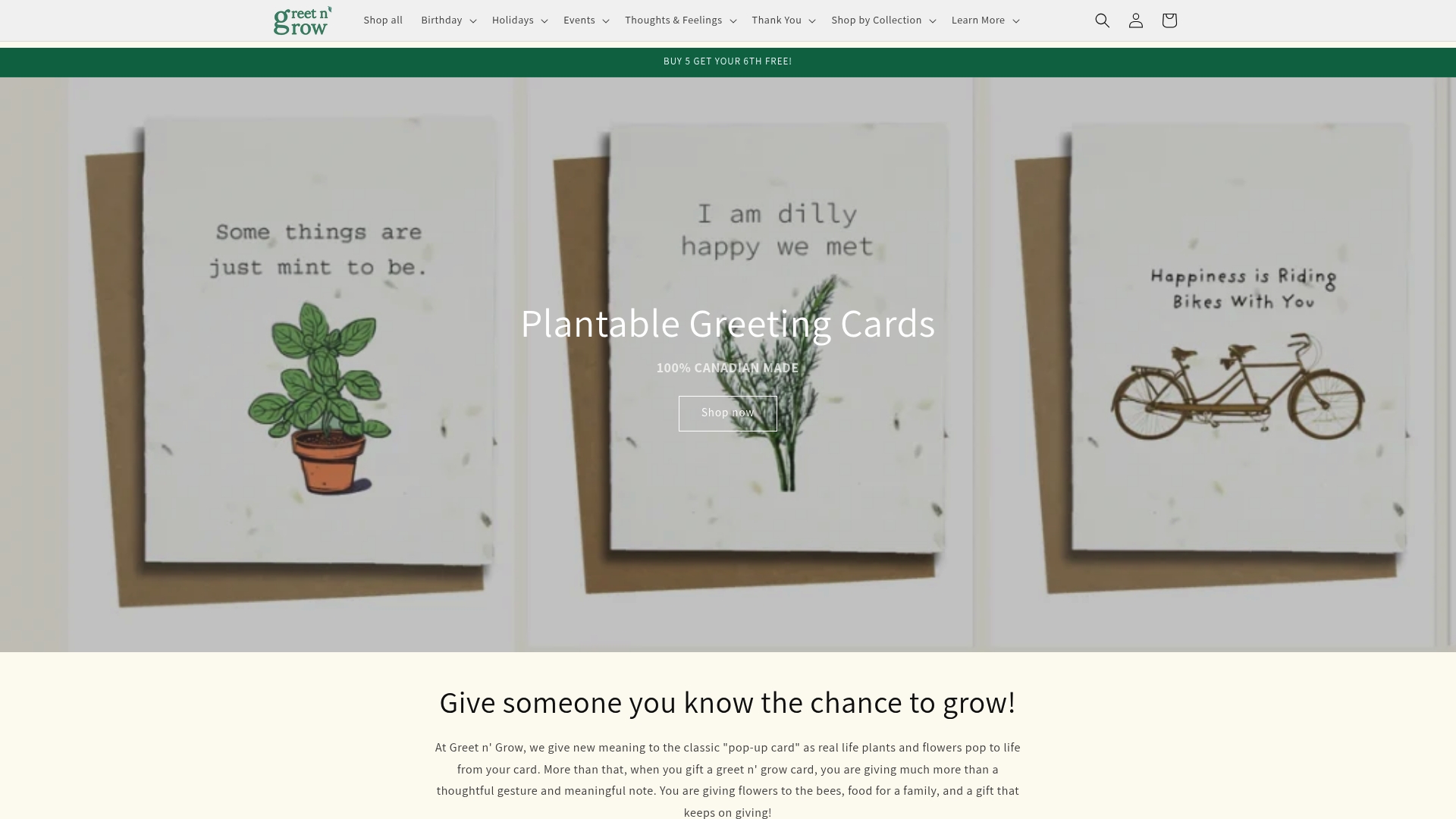
If you would like to send something that blooms rather than lands in the recycling, you will find our plantable cards for every occasion at Greet n’ Grow. For couples, our plantable wedding cards are a thoughtful keepsake, and for February our seed paper Valentines turn a love note into something living. Each card comes with a recycled kraft envelope and is blank inside for your own words.
FAQ
Do bugs eat seed paper?
Bugs are rarely the main concern. The bigger risks are soil fungi that cause damping-off, mould from too much water, and birds or small mammals that dig up seeds. Covering the paper with a thin layer of soil and keeping it evenly damp deals with most of them.
How long does seed paper take to sprout?
It depends on the plant, the soil temperature and the moisture. Warm, evenly damp soil speeds things up, and cold soil slows things down. Our guide to planting seed paper in Canada explains the soil temperature to wait for.
Why is my seed paper growing mould?
Mould usually means the paper has stayed too wet with too little airflow. Let the surface dry, make sure the pot drains, move it somewhere airier and water less often.
How do I keep birds and squirrels away from planted seed paper?
Cover the paper with a thin layer of soil so the seeds are hidden, and start it in a pot indoors or on a sheltered sill. Outdoors, a light mesh or cloche over the bed until seedlings are up gives good protection.
What should I do with seeds that came in the mail unexpectedly?
Do not plant, compost or flush them. The CFIA says to double-bag the seeds and packaging and put them in regular garbage that goes to landfill, and to report them to your regional CFIA office.
Sources
- Canadian Nursery Crop Profile: container production, Agriculture and Agri-Food Canada
- Damping-off in Vegetables, Mississippi State University Extension
- Poor Germination of Vegetable Seeds, University of Maryland Extension
- Damping-Off, UC IPM
- Starting Seeds in Greenhouses, UMass Extension
- Starting Your Seedlings Indoors, Seeds of Diversity
- Tiny seeds you buy online can cause big trouble, CFIA
- Disposing of unsolicited seeds, CFIA
- I got a seed packet in the mail, Canadian Wildlife Federation